Street Legal / LSV
What to Look for When Buying a Street-Legal Electric Golf Cart in 2026
Start with the vehicle’s documentation and your intended route. Then compare seating, battery, charging, service and ownership costs before choosing a cart.
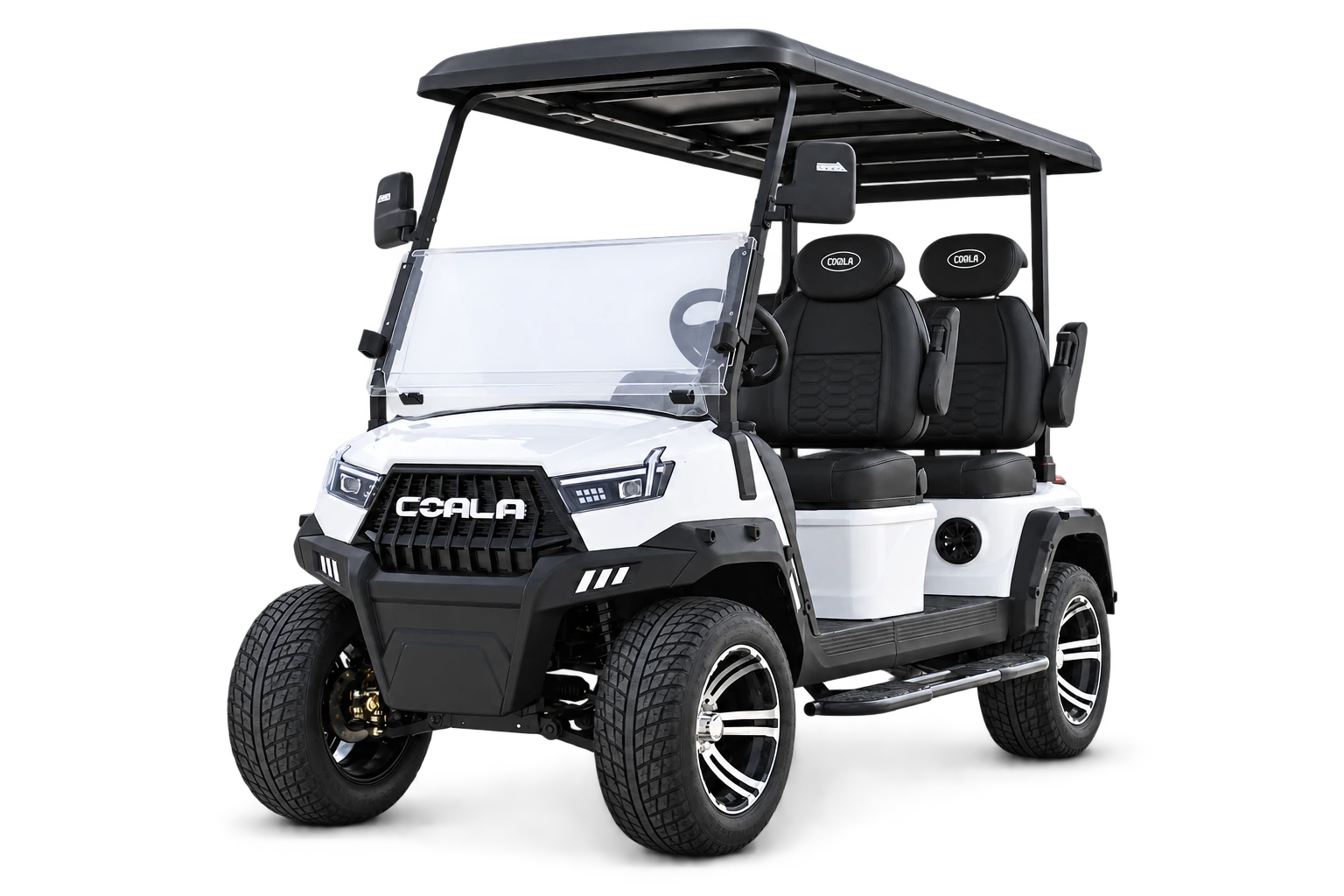
Choosing street-legal electric golf carts starts with certification, your intended roads and the people who will ride. Use this guide to compare the complete ownership offer.
Start with where you plan to drive
A cart for a private property and a vehicle for public roads can involve different requirements. Write down the routes you want to travel: neighborhood streets, a golf property, a resort or a commercial site. Ask the relevant motor-vehicle authority and local road authority whether your exact vehicle and intended route are permitted. Community permission alone should not be treated as proof that a public-road trip is allowed.
Keep the answer specific. A seller’s description of a vehicle as “street legal” should be supported by the documents for the actual vehicle you are buying, not simply by a list of accessories.
Understand the difference between a golf cart and an LSV
A low-speed vehicle, or LSV, is a regulated vehicle category. The federal equipment standard is FMVSS No. 500. A standard golf cart does not become a certified LSV just because it has lights or can reach a particular speed. Ask the seller to explain the vehicle classification, provide its VIN and certification documentation, and identify the registration paperwork you will receive.
Federal vehicle requirements and permission to use a particular road are separate questions. State and local rules also matter. For example, California’s low-speed vehicle provisions address road-speed restrictions and exceptions. Check the current rules in your own location before choosing a route.
All Coala models are LSV certified, including for California. This covers every B-Series passenger and Utility model. Public-road use remains subject to state and local requirements, including registration, insurance and permitted roads. Your dealer can help with the documentation for your vehicle.
Look beyond motor power
Ask how the motor, controller, battery and vehicle load work together for your use. A motor’s headline power number is only one part of a vehicle configuration. Bring your usual passenger count, terrain and route length to the conversation. Ask for a demonstration in an appropriate permitted setting, and discuss the manufacturer’s operating limits rather than assuming a more powerful motor makes a vehicle suitable for every hill or load.
Compare battery capacity, range and charging together
Ask for the battery’s voltage, capacity, chemistry, warranty and replacement options. Compare matching specifications; an amp-hour figure alone is not a complete comparison between systems with different voltages. Ask the dealer to explain the pack’s usable energy and which charger is included.
Treat a published range figure as a starting point for questions. Find out the conditions behind it, including passenger load, terrain and speed, and allow a practical reserve for your daily trips. Do not plan a routine trip that depends on achieving the longest advertised distance every time.
Before delivery, confirm the charging instructions for the exact pack and charger. Ask about the required outlet, charging location, typical charging time, storage guidance and any temperature limits. Follow the supplied manuals. Have an appropriately qualified professional check any electrical installation needed at your property.
Match seating to the people who will ride
Compare designated seating positions and their orientation, not just a model’s overall length. Think about how passengers enter and exit, legroom and whether your usual group can sit comfortably. Ask about the vehicle’s passenger and load limits, including anything you intend to carry.
The Coala B-Series includes different layouts. 4 Forward has four forward-facing seats, while 2+2 has two forward-facing and two rear-facing seats. These configuration comparisons do not establish road-use eligibility. Review the documents for the exact cart offered by your dealer.
Check braking, safety equipment and build quality
Ask the dealer to demonstrate the service brake and parking brake and explain inspection and maintenance intervals. Where an LSV is being offered, verify the applicable equipment and certification against the current federal standard. Items addressed by FMVSS No. 500 include lighting, mirrors, a compliant windshield, VIN, seat belts, rear visibility and an alert sound. A checklist is not a substitute for certification.
During a walkaround, inspect the fit of panels, seat attachment, wiring protection and the condition of tires and controls. Ask how any concern will be corrected before delivery. Check that the supplied manuals match the vehicle configuration and keep copies with your purchase records.
Read the warranty and ask about service
Request the written warranty before paying. Check which organization provides coverage, what is excluded, and whether vehicle, battery and electronics have different terms. Ask who performs repairs, whether labor and transport are covered, and how a claim is started.
Replacement parts and local service matter after the first drive. Ask who stocks common service items, how parts are identified, and how the dealer handles an issue requiring manufacturer assistance. A named service contact and clear process are more useful than a general promise of support.
Compare the complete ownership offer
Request an itemized quote covering the chosen configuration, delivery, applicable fees, accessories and any required registration services. Discuss battery replacement, scheduled maintenance and transport to service as separate ownership considerations. If financing is offered by a dealer or lender, review its written terms separately; this guide does not advertise a Coala financing program.
Price comparisons are most useful when equipment, warranty and support are comparable. Avoid assuming the lowest purchase price or the longest feature list will fit your needs best.
Questions to take to the dealer
- What classification and documentation apply to this exact vehicle?
- Who can confirm whether it is permitted on my intended roads?
- What is the seating configuration and permitted load?
- What conditions were used for the quoted range?
- Which battery and charger are included, and what installation is needed?
- Who handles repairs, parts and warranty claims?
- What is included in the itemized delivered price?
Quick answers before you buy
What makes a golf cart street legal?
Start with the vehicle classification and certification documents, then check registration and permitted roads. Lights or a speed setting alone do not establish eligibility. Federal FMVSS No. 500 addresses equipment and a maximum tested speed of 25 mph for low-speed vehicles. Ask the dealer to identify the certification label and VIN on the exact vehicle.
Can I drive a street-legal golf cart on any road?
No. Road access depends on state and local rules. In California, LSV operation is generally limited to roads posted at 35 mph or less; crossing rules, local restrictions and specific exceptions also apply. Check the complete route with the relevant authority before planning a trip.
Do I need a title, registration, a license or insurance?
Requirements depend on vehicle classification and location. California LSV drivers need a valid driver license, current registration and proof of financial responsibility. Before purchase, ask your DMV which ownership documents and applications it requires, and ask an insurer about coverage for the exact VIN and intended use. See our golf cart title, registration and insurance guide.
How much range should I plan for?
Use the published estimate as a starting point, then discuss passenger load, hills, speed, temperature and charging access. Ask your dealer which battery and charger are included. Compare our electric golf cart range guide and battery care guide.
A document checklist for your dealer visit
- Record the exact model, year, VIN and vehicle classification.
- Ask to see the manufacturer certification label and the ownership paperwork supplied with that vehicle.
- Confirm your DMV's title, registration, inspection and fee requirements before delivery.
- Obtain an insurance quote for your planned drivers and use.
- Write down your intended route and verify that each road and crossing is permitted.
- Keep the invoice, written warranty, manuals and service contact together.
Choose the seating layout that fits your trips
Compare 2+2 for two forward-facing and two rear-facing seats, 4 Forward for four forward-facing seats, and 4+2 for a six-passenger layout. For golf equipment, explore the 2 Seats Golf Edition or 4 Forward Golf Edition. Confirm the exact vehicle documents and local road eligibility with your dealer; seating capacity and accessories do not replace that check.
Find a Coala dealer to compare available vehicles, ask for the document checklist and arrange a demonstration in a permitted setting.
Frequently asked questions
Do lights and seat belts make a golf cart street legal?
Do not assume so. Equipment, vehicle certification, registration and local road-use permission need to be checked separately for the actual vehicle.
Can I buy directly from Coala?
Coala works through its dealer network. Find a dealer to discuss available configurations, documentation, pricing and a suitable next step.
Which Coala model should I start with?
All Coala models are LSV certified, including for California. Start with passenger count, seating orientation and intended use. Compare the B-Series lineup, then ask a dealer about availability and the registration and road-use requirements in your location.
Continue your research
Sources and review
Reviewed 2026-10-28. External requirements can change; consult the current official source.
Explore the configurations
YOUR NEXT MOVE